

Pavement Ants
Pavement Ant Control in Hampton Roads
Pavement ants are one of the most persistent ant species in Hampton Roads. These small, dark ants build mounds along driveways, sidewalks, patios, and foundation lines — and they often enter homes through slab cracks, expansion joints, and utility penetrations. Once inside, they trail heavily around kitchens, pantries, and pet food areas.
Bust‑A‑Bug provides targeted treatments designed specifically for the soil‑nesting, structure‑invading behavior of pavement ants.
How to Identify Pavement Ants
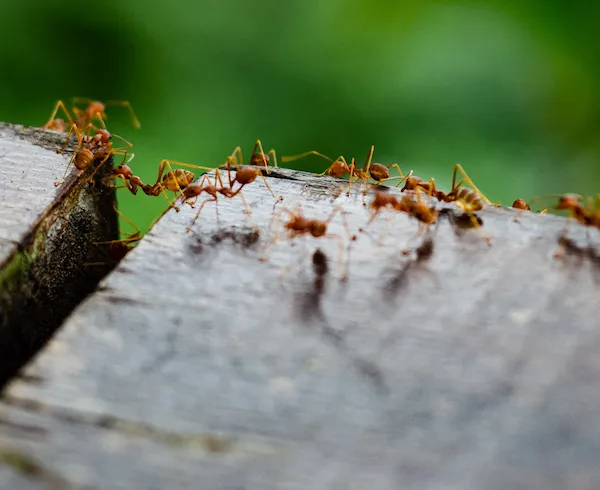
Pavement ants are small, typically 1/16 to 1/8 inch long, and dark brown to black. You may notice:
- Small dirt or sand mounds along driveways, sidewalks, and patios
- Ants trailing along foundation lines or entering through slab cracks
- Activity around kitchen floors, baseboards, and pantry areas
- Ants clustering around crumbs, grease, or pet food
- Heavy foraging after rain or temperature changes
If you’re seeing small mounds near concrete or brick, pavement ants are likely the cause.
Why Pavement Ants Are a Problem in Hampton Roads
Our region’s soil, climate, and home construction make pavement ants extremely common.
Sandy Coastal Soil
Pavement ants thrive in loose, sandy soil — exactly what we have throughout Virginia Beach, Norfolk, and Chesapeake.
Slab Foundations & Driveways
These ants nest under concrete slabs, patios, and sidewalks, then enter homes through tiny cracks and expansion joints.
Moisture & Heat
Warm, humid weather increases foraging activity and drives ants indoors seeking food and shelter.
Dense Neighborhoods
Pavement ants form large colonies that spread easily across yards, sidewalks, and shared property lines.
Signs You Have a Pavement Ant Infestation
Look for:
- Small dirt mounds along driveways, sidewalks, patios, or garage edges
- Ants entering through cracks in concrete or brick
- Trails along baseboards, kitchen floors, and pantry areas
- Activity around pet food bowls or trash cans
- Increased ant activity after rain or warm weather
If you’re seeing mounds near concrete, the colony is active and expanding.
How Bust‑A‑Bug Treats Pavement Ants
Pavement ants require a colony‑level approach because they nest deep in soil and under concrete.
Our treatment strategy eliminates the entire colony:
Inspection & Identification
We locate mounds, entry points, and foraging trails around your home.
Precision Baiting
We use professional baits that pavement ants carry back to the colony, eliminating queens and brood.
Non‑Repellent Perimeter Treatments
These allow ants to pass through treated areas and spread the product throughout the colony.
Crack & Crevice Targeting
We treat slab edges, expansion joints, and foundation gaps where pavement ants commonly enter.
Ongoing Protection
Regular service prevents new colonies from forming and keeps your home ant‑free year‑round.
Why Pavement Ants Keep Coming Back
Homeowners often see pavement ants return even after cleaning or DIY sprays. Here’s why:
- They nest deep under concrete, where sprays can’t reach
- Colonies can contain tens of thousands of ants
- They follow strong scent trails that reform quickly
- They split into new colonies when disturbed
Professional, colony‑focused treatment is the only reliable solution.
Why Choose Bust‑A‑Bug for Pavement Ant Control
- Local experts who understand Hampton Roads soil and moisture conditions
- Treatments designed for soil‑nesting, slab‑invading ant species
- Safe for kids and pets
- Friendly, reliable, locally owned service
- Proven results across Virginia Beach, Norfolk, Chesapeake, Suffolk, and surrounding areas
We don’t just reduce pavement ants — we eliminate the colony beneath the concrete.
Related Ant Resources
Strengthen your home’s protection and explore more ant species common in Hampton Roads:

